Jack McEvoy
The Brass VerdictJack McEvoy is a Los Angeles Times reporter whose coverage brings the press into the orbit of Mickey Haller’s takeover of Jerry Vincent’s practice and the high-profile Walter Elliot murder trial. McEvoy’s delayed article and repeated attempts to speak with Haller frame him as a persistent journalist working around the trial’s schedule and Haller’s limited availability.
Identity and Introduction
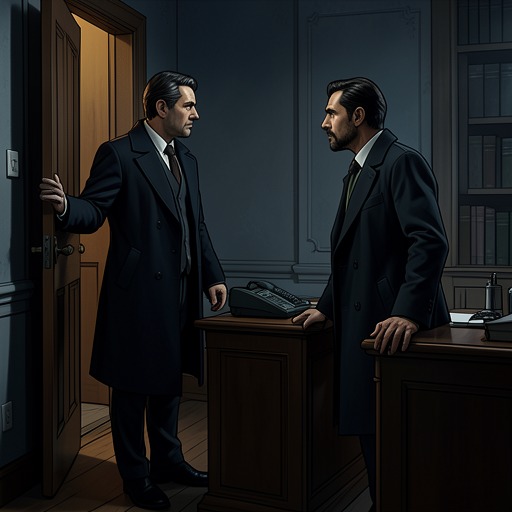
McEvoy is identified as a reporter for the Los Angeles Times and, in the article carrying his byline, as a Times staff writer. He first appears outside the courtroom during a lunch recess, pushing past prospective jurors as they leave the elevator, scanning the hallway, and making directly for Haller. Haller recognizes the approach as trouble before McEvoy has explained why he is there, establishing an immediate tension between a reporter’s pursuit of a story and a lawyer’s guarded attention to the case.
Reporting on Haller and the Elliot Trial
McEvoy’s article, headed Walking in a Dead Man’s Shoes, presents Haller’s inheritance of Vincent’s work as an abrupt entry into exceptionally demanding circumstances. It reports that Haller had taken on Vincent’s 31 cases two weeks earlier, but identifies the Elliot case as the one carrying the greatest stakes. The account notes that Vincent was found shot to death in his car in downtown Los Angeles and that Haller stepped into his place as counsel for Walter Elliot, the Archway Studios chairman charged in the killings of his wife and her alleged lover in Malibu. It also reports that testimony was scheduled to begin that day, placing Haller’s professional handover and the murder trial in the same public frame.
The article’s publication had not followed the schedule McEvoy first gave Haller. When Haller challenged him for the gap between the promised Sunday publication and Thursday, and for failing to return calls, McEvoy explained that he had been told the story would run Sunday, but the paper had decided to hold it until closer to the trial. The delay makes the coverage’s timing part of their exchange: McEvoy presents it as an editorial decision, while Haller emphasizes that other reporters are interested and that he does not need the Times.
Encounters at Court
McEvoy’s contact with Haller is not confined to the hallway conversation. Later, when Haller turns around, McEvoy is again there with his pad and pen ready. Haller tells him not now, and McEvoy begins to say that he only has a quick question before the exchange is cut off in the available scene. The recurrence gives McEvoy a small but clear role in the courtroom narrative: he keeps trying to obtain access while Haller manages the demands surrounding a trial about to begin.